
Shape and core thickness change how a paddle swings, where the sweet spot sits, and how the ball feels coming off the face. Your best fit comes down to the shots you use and the way you like a paddle to move.
See the shapes side by side
Look at the width of the face, the length above the handle, and the overall reach of each shape.

Standard shape
A standard paddle gives you a comfortable mix of width, reach, and handle length. It works well for doubles players who want solid contact across the face. It's also an easy shape to get along with if you're buying your first paddle.
The Paddletek Tempest Wave Pro-C and Bantam ESQ-C are two good examples. The Tempest Wave Pro-C has an all-court feel. The Bantam ESQ-C brings more power to a similar standard shape.
Widebody shape
A widebody gives you more room from side to side. That larger target feels forgiving and helps the paddle stay steady when contact drifts away from the center. The extra width helps during quick kitchen exchanges, blocks, and off-center contact.
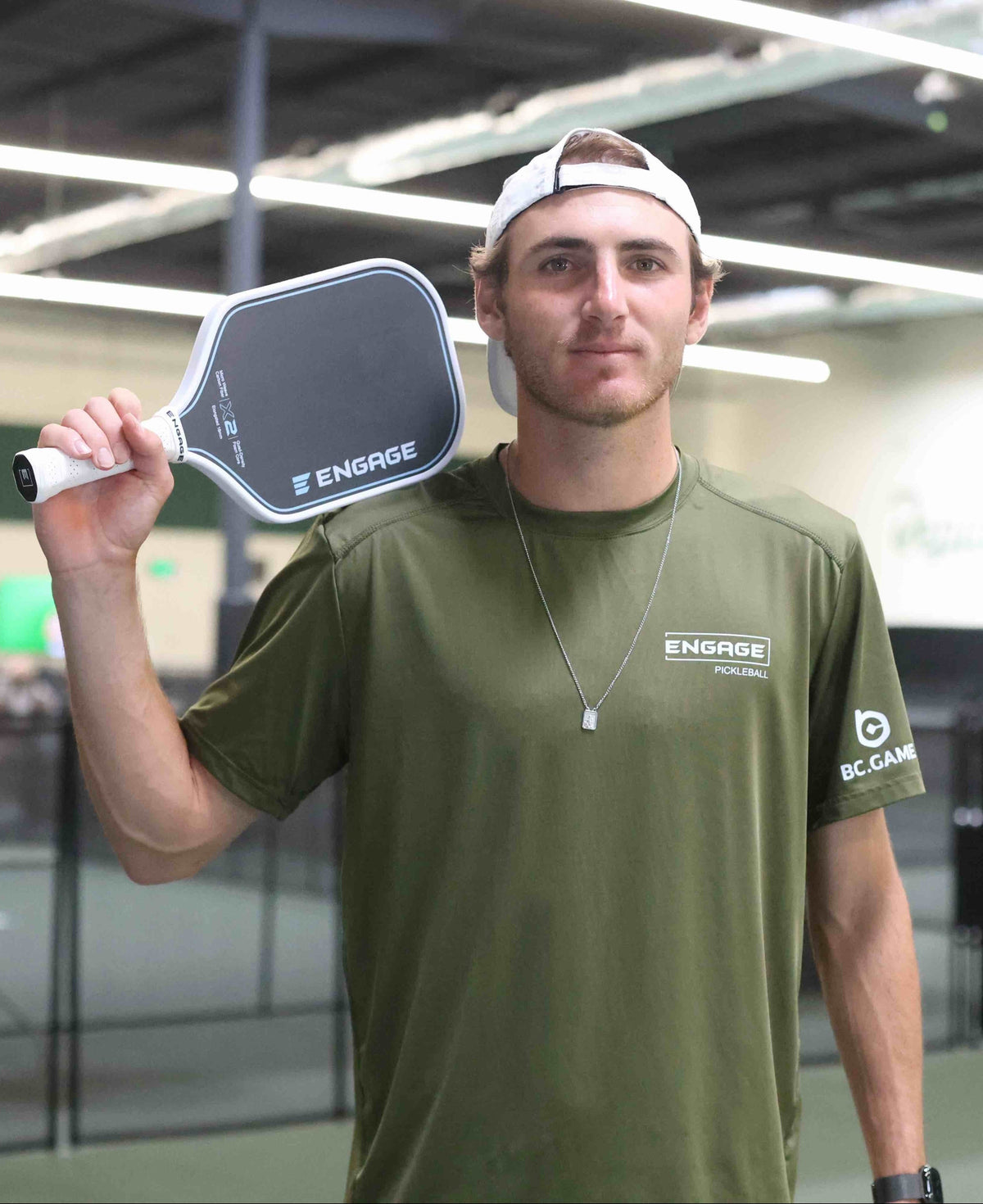
Take a look at the Engage Pursuit Pro1 Widebody and X2 Widebody. This shape is especially helpful when your misses tend to land near the left or right edge of the face.
Elongated shape
Elongated paddles add reach and leverage. They can put more weight behind a serve or drive, and the shape feels familiar to many tennis players. The face is narrower, and some elongated paddles take a little more effort to move in fast hand battles.
Examples include the JOOLA Magnus 3S Dual, Paddletek Bantam TKO-C and TKO-CX, Paddletek Tempest TKO-C, and Engage Pursuit Pro1 Elongated. Longer handles work well for two-handed backhands. The Magnus pairs its elongated face with a shorter handle for one-handed attacking shots.
Hybrid shape
A hybrid gives you added reach while keeping more width than a typical elongated paddle. A hybrid works well for players who want more reach without giving up as much width as an elongated paddle.
Compare the Paddletek Bantam GTO-C with the Engage Pursuit Pro1 Hybrid. Both give aggressive players a versatile shape that still feels manageable around the kitchen.
What core thickness changes
| Thickness range | Common feel | Often suits |
|---|---|---|
| 12.7mm | Fast, direct, immediate response | Performance players who want quicker acceleration, counters, and extra pop |
| 14mm | Powerful with some added dwell | Players looking for easy pace |
| 15 to 16mm | Softer, stable, forgiving | Control players, resets, drops, developing consistency |
We carry 12.7mm performance paddles. The Engage Pursuit Pro1 Hybrid is available in 12.7mm. A thinner core does not automatically mean beginner or low quality. It usually gives the paddle a faster, more direct response. Entry-level department-store sets are a separate category.
Use those ranges as a general guide. Foam, polymer honeycomb, face material, balance, and construction can make two paddles at the same thickness feel completely different.
How to choose
- Newer players usually feel comfortable with a standard or hybrid paddle in the 15 to 16mm range.
- Players chasing more reach and drive power should check out elongated 12.7 to 14mm options.
- Fast doubles players may enjoy a standard or widebody with an easy-swinging balance.
- Two-handed backhand players should check the handle length early in the shopping process.
Go back to the complete paddle buying guide or check out power, control, and all-court paddles.


